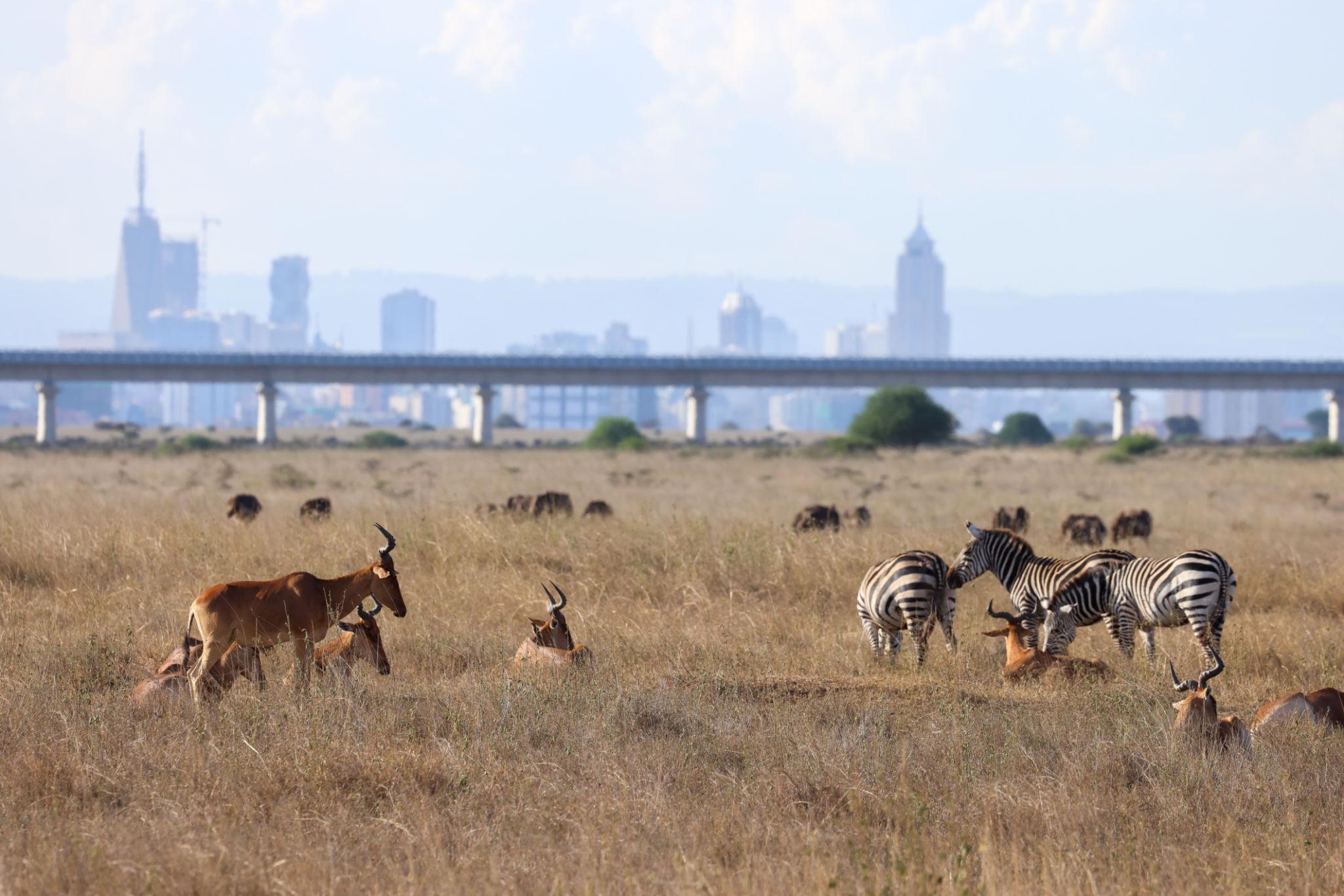
Lake Nakuru Game Drives: Rhino, Birdlife and Kenya Safari Planning Guide
NAMSA Prestigious Tours | Lake Nakuru Safari Guide
Lake Nakuru National Park combines rhino conservation, Rift Valley scenery, woodland wildlife, waterbirds and accessible game drives in one compact safari destination. This guide explains how to plan Lake Nakuru game drives, choose the right safari style and vehicle, understand realistic wildlife expectations, compare a Nairobi day trip with an overnight stay, and connect Nakuru with the wider Kenya safari itinerary.
Why Lake Nakuru belongs on a Kenya wildlife safari
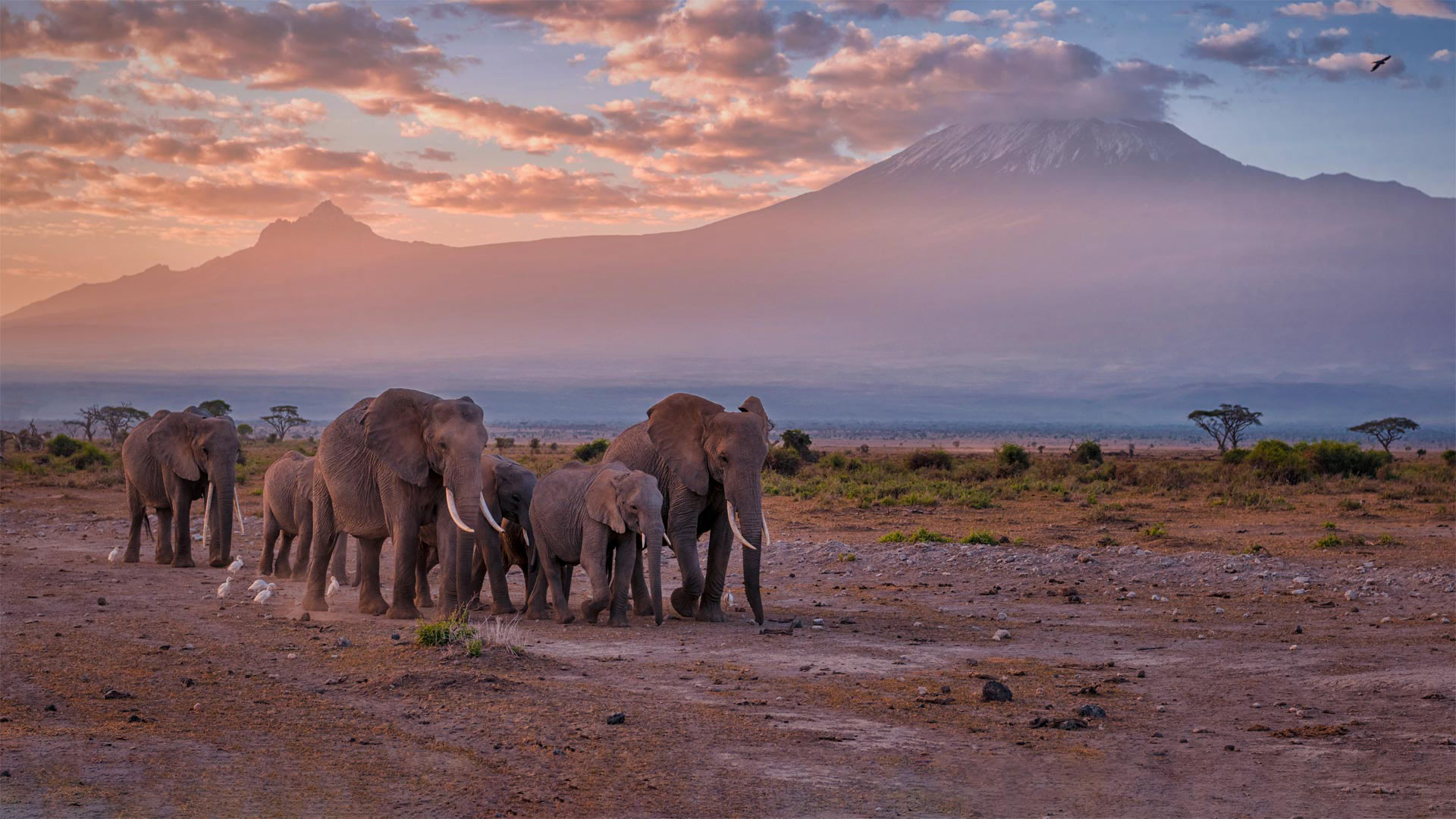
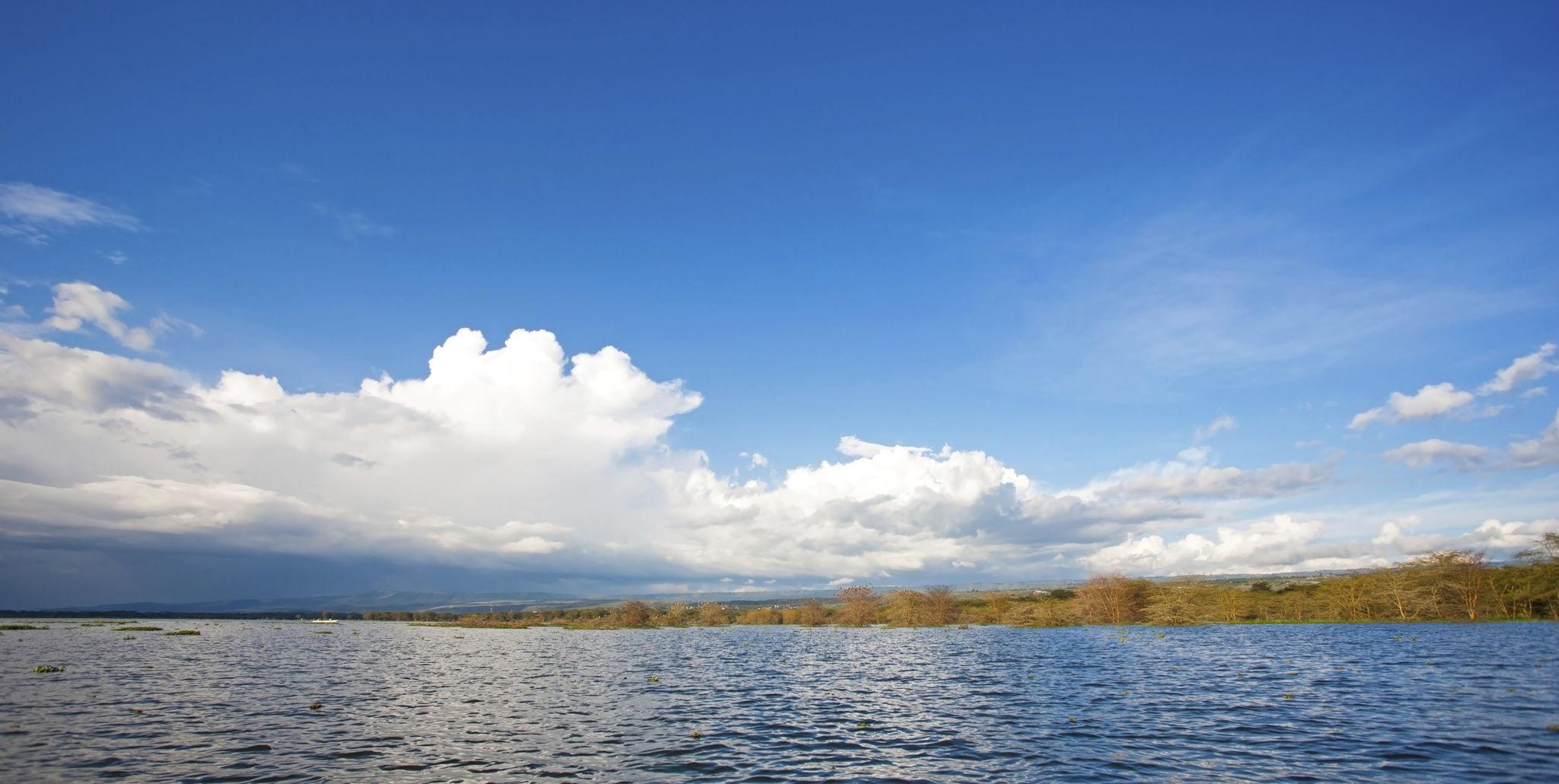
Lake Nakuru National Park offers a different experience from the open grasslands of a Masai Mara safari or the elephant landscapes associated with Amboseli National Park tours. Here, the game drive moves between lake views, grassland, acacia woodland, rocky slopes and elevated viewpoints. This habitat variety makes a relatively short visit feel visually diverse and allows Kenya travellers to look for mammals, birds and scenery during the same outing.
Kenya Wildlife Service describes Lake Nakuru as a flagship sanctuary for endangered black and white rhinos and identifies it as Kenya's first government-managed rhino sanctuary, designated in 1987. KWS also records approximately 450 bird species in the park. For travellers comparing Kenya safari destinations, these conservation and birding strengths are major reasons to include Nakuru in a broader Kenya savannah tour. Read the official Kenya Wildlife Service Lake Nakuru National Park profile.
Lake Nakuru is also part of the UNESCO-listed Kenya Lake System in the Great Rift Valley together with Lake Bogoria and Lake Elementaita. UNESCO highlights the system for its exceptional bird diversity, flamingo ecology and important mammal populations. This gives a Lake Nakuru safari both wildlife value and wider ecological significance. Explore the UNESCO World Heritage listing for the Kenya Lake System.
If this is your first visit, begin with NAMSA's broader guide to what Lake Nakuru is famous for. It explains the park's rhinos, birdlife, viewpoints and changing flamingo story before you decide how much time to allocate to the game drive.


Plan Lake Nakuru game drives for rhinos, birdlife and Kenya safari tours
The best Lake Nakuru game drive begins with priorities rather than a rigid checklist. Tell your driver-guide whether your main interest is rhinos, general wildlife, birding, photography, viewpoints or a balanced introduction to the park. A first-time visitor may prefer a broad route, while a photographer may want fewer locations and more time at individual sightings. Families may need shorter viewing periods and planned comfort stops.
Start with habitat. Around more open ground, scan widely for grazing animals and large mammals. In woodland, slow down and watch gaps between trees. Along accessible sections near the lake, use binoculars for waterbirds and distant wildlife. If road conditions and time permit, scenic viewpoints can help you understand how the lake, woodland and surrounding Rift Valley landscape connect.
KWS lists scenic viewpoints, picnic sites and Makalia Waterfalls among the park attractions. However, access can depend on weather, water levels, track conditions and current park management. A responsible Kenya safari guide should therefore adjust the route on the day rather than promise every mapped stop in advance.
Game drives Kenya travellers remember most are often those where the vehicle stops long enough to observe behaviour. If a rhino is feeding calmly, a giraffe is browsing close to the track, or birds are actively feeding, spending additional time at that encounter can be more rewarding than racing to another viewpoint. This is especially important on private Kenya safaris because a dedicated vehicle gives the group greater control over pacing.
Rhinos and other wildlife to watch for on Lake Nakuru game drives
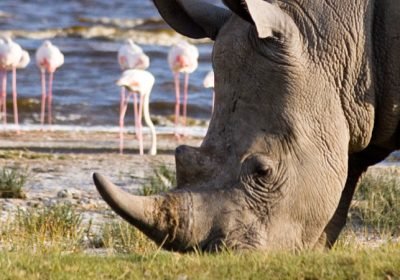
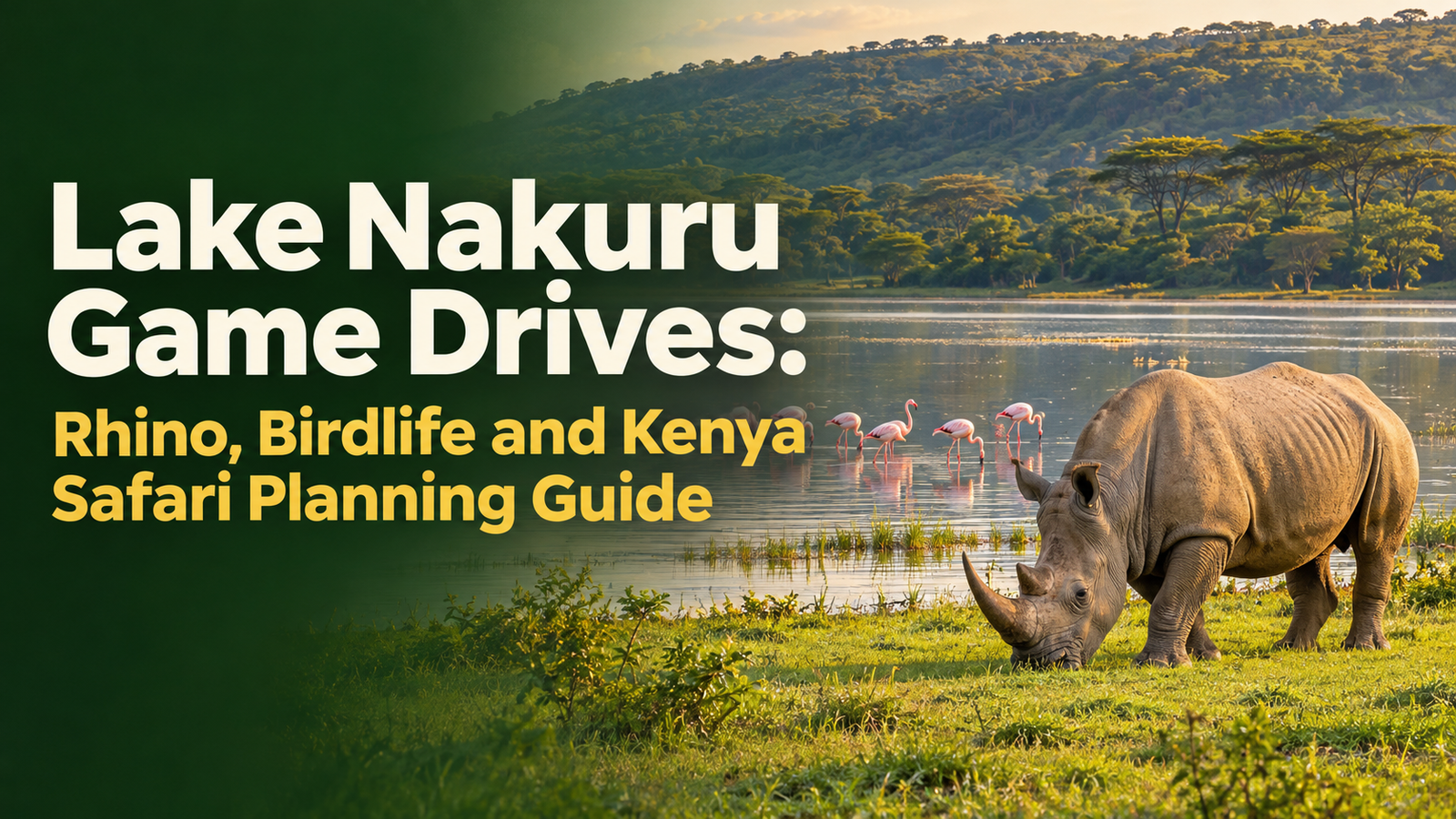
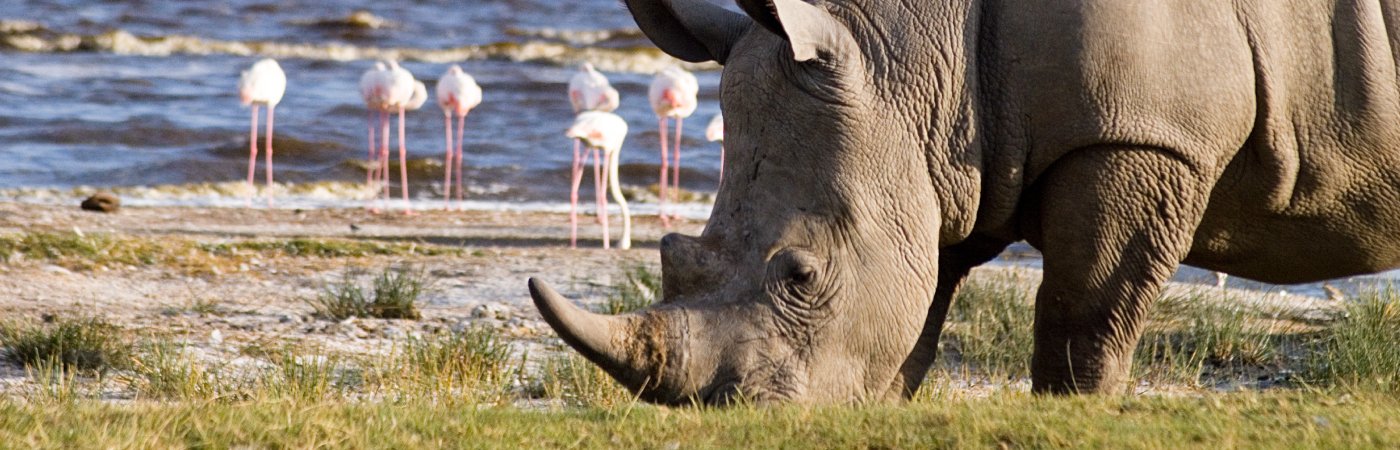
Rhinos are one of the strongest reasons to include Lake Nakuru in Kenya wildlife safaris. Both black and white rhinos occur in the protected landscape. During a clear sighting, your guide may point out differences in feeding style and mouth shape: white rhinos are primarily grazers with a broad mouth, while black rhinos are browsers with a more pointed upper lip. In distant or partly obscured sightings, identification may require patience.
No ethical safari company should guarantee a wild rhino sighting, but Lake Nakuru is one of Kenya's important rhino conservation areas. Travellers whose main safari goal is rhino viewing can also compare Nakuru with other strong destinations in NAMSA's guide to the best places to see rhinos in Kenya.
Other wildlife can include buffaloes, giraffes, waterbuck, baboons and several antelope species. Lions and leopards also occur, although sightings can be less predictable. The value of the park is not that it reproduces every experience available elsewhere, but that it adds a compact conservation landscape with strong rhino, birding and scenic appeal to a Kenya safari itinerary.
Lake Nakuru should not be marketed as a complete Big Five destination because elephants are not part of the normal park wildlife experience. Travellers wanting a wider Big Five safari can combine Nakuru with the Maasai Mara, Amboseli, Tsavo, Ol Pejeta or other Kenya safari destinations. This is one reason custom Kenya safari itineraries are often more rewarding than trying to make one park deliver every experience.

Flamingos, pelicans and Lake Nakuru birdwatching
Lake Nakuru became internationally famous for historic images of enormous flamingo gatherings, but modern travellers should not assume that the shoreline will always be covered in pink. Flamingo numbers vary as birds move between Rift Valley lakes in response to water chemistry, food availability and ecological conditions. A responsible safari company should never guarantee a major flamingo concentration months in advance.
This does not reduce the park's value for birdwatching. KWS describes Lake Nakuru as an ornithological paradise with about 450 bird species. Pelicans, cormorants, herons, storks, raptors and woodland birds can all add variety to the drive. UNESCO also identifies the wider Kenya Lake System as globally significant for bird diversity and flamingo ecology.
Birders should tell the guide before the drive begins. That allows more time near productive habitats and prevents the route from becoming focused only on large mammals. Binoculars are essential, especially when water levels place birds at a distance from an accessible track.
The Ramsar Sites Information Service also recognises Lake Nakuru as a Wetland of International Importance. Travellers interested in sustainable safari Kenya experiences can use the park as an opportunity to understand how tourism, wildlife conservation, wetland ecology and surrounding human activity are connected. Visit the Ramsar Sites Information Service.
Best time to visit Lake Nakuru for a Kenya safari
Lake Nakuru is generally an all-year safari destination. The best time to visit Kenya safari destinations depends on what you value most. Drier conditions may make some tracks easier and can simplify wildlife viewing in more open areas. Greener periods can produce lush vegetation, dramatic skies and strong landscape photography. Birding remains important throughout the year, while migratory species can add seasonal interest.
For a morning drive, an overnight stay nearby gives you the easiest start because you can reach the gate without a long transfer from Nairobi. Cooler morning conditions can also be pleasant for guests and photography. If you are arriving from another destination, an afternoon drive can work, but the schedule should allow enough time for entry, wildlife viewing and exit under the park's current operating arrangements.
The best time to book Kenya safari travel depends on season, accommodation demand and how specific your preferences are. Great Migration Kenya safari dates, premium lodges and popular tented camps can fill earlier than ordinary low-season travel. If Lake Nakuru is only one stop in a longer itinerary, reserve the full route together so that transfer times, park days and accommodation fit logically.
Lake Nakuru day trip from Nairobi or overnight safari?
A Nairobi day trip is useful for travellers with one available day. KWS places Lake Nakuru National Park about 156 kilometres northwest of Nairobi by road. However, the real decision should be based on the full day, including city traffic, gate access, comfort stops, lunch and the amount of usable time inside the park. A long transfer can still be worthwhile when the alternative is missing the destination entirely.
An overnight stay is better for Kenya travellers who prefer a slower pace. It can provide an early-morning game drive, reduce the pressure of a same-day return to Nairobi and allow the itinerary to connect more naturally with Lake Naivasha or the Maasai Mara. Overnight planning also gives more choice among Kenya safari accommodation options, including lodges, tented camps and properties outside the park.
Travellers comparing affordable Kenya safari packages should calculate value rather than choosing only the lowest headline price. A cheaper package can become less attractive if it provides very little park time, uses inconvenient accommodation, or requires a crowded vehicle. Conversely, a well-designed budget safari can offer excellent wildlife viewing if the route, guide and timing are strong.


Budget safari, midrange safari or luxury Lake Nakuru safari?
Lake Nakuru can be included in budget safaris, mid-range safaris and luxury Kenya safaris. The park itself does not change according to accommodation category, but your comfort, privacy, vehicle arrangement, meal plan, lodge location and flexibility can change substantially. Choosing the right level should therefore begin with the experience you want, not only the label attached to the package.
Budget Kenya safaris
Best for travellers prioritising wildlife and value. Compare vehicle occupancy, accommodation distance, meals, park fees and actual game-drive time before booking.
Midrange safari
A useful balance of comfort and price, often with stronger lodge standards and more convenient locations than the most basic budget packages.
Luxury Kenya safaris
Best for travellers wanting premium accommodation, private service, greater flexibility and more control over stops, pacing and transfers.
Kenya safari vehicle types also matter. A private 4x4 safari vehicle is particularly useful for photographers, families and travellers who want control over stops. A safari van may suit a budget-focused road safari. Group Kenya safaris reduce transport costs by sharing the vehicle, but they also require guests to coordinate viewing time and seating.
Luxury Kenya safari operators with private guides usually build more flexibility into the day, but travellers should still ask practical questions: How many guests share the vehicle? Does every traveller have a window or clear viewing position? Is the roof suitable for game viewing? How much luggage can be carried? Is the vehicle dedicated to your group?
NAMSA lists both private Kenya safari options and family-friendly Kenya safari experiences. Travellers who want to keep costs lower can also consider group joining routes that combine the Rift Valley with the Maasai Mara.
Lake Nakuru safari costs Kenya travellers should budget for
Safari costs Kenya visitors pay are normally made up of several separate components: park conservation fees, vehicle and driver-guide costs, fuel, accommodation, meals, airport or hotel transfers, optional activities and sometimes administration or payment charges. A quotation should clearly show what is included and what remains payable by the traveller.
As checked in November 2026, the official Kenya Wildlife Service Lake Nakuru page lists non-resident park entry at USD 90 per adult and USD 45 per child. Different rates apply to East African citizens, Kenya residents and African citizens. Park fees can change, so always verify the current amount directly through KWS before travel rather than relying on an old blog post, screenshot or social media price. Check current Lake Nakuru National Park rates on KWS.
When comparing Kenya safari deals, ask whether the quoted amount includes the park fee, transport from Nairobi, lunch, accommodation, a private or shared vehicle and the number of game drives. Booking a Kenya safari based only on the lowest visible price can create misunderstandings if important costs are added later.
For budget safari travellers, sharing transport is usually the biggest way to lower per-person costs. For private Kenya safaris, the vehicle cost is spread across the number of guests in your party. Families and small groups can therefore sometimes obtain strong value from a private vehicle even when the headline price is higher than a group seat.
How Lake Nakuru fits into the best Kenya safari itineraries
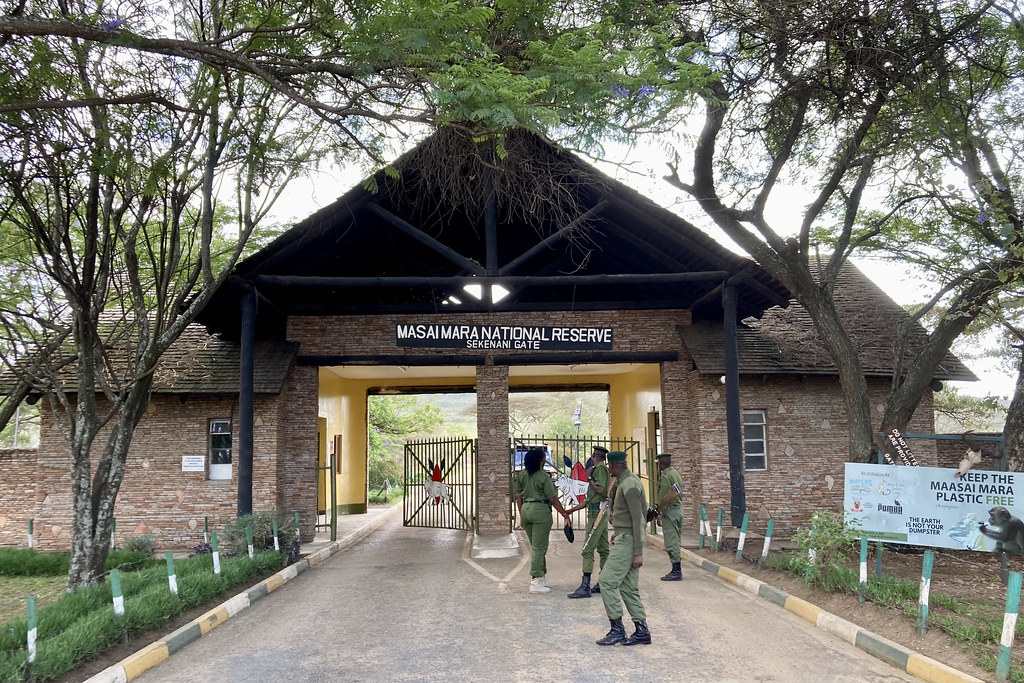
Lake Nakuru works especially well as part of a route through Kenya's Rift Valley. One of the most practical combinations is Nairobi, Lake Naivasha, Lake Nakuru and the Maasai Mara. Lake Naivasha adds boat rides, hippos and birdlife; Lake Nakuru adds rhinos and a classic game drive; the Maasai Mara adds open savannah, big cats and, in season, the Great Migration Kenya safari experience.
Travellers deciding between the two Rift Valley lakes can read NAMSA's Lake Nakuru vs Lake Naivasha comparison. If time permits, visiting both is usually better than treating them as substitutes because their safari experiences are different.
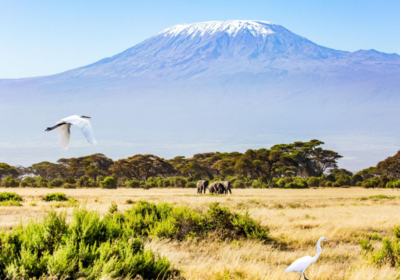
Amboseli National Park tours are another strong addition. Amboseli is famous for elephants and views towards Mount Kilimanjaro, while Nakuru strengthens the itinerary for rhino viewing. Tsavo safaris can extend the journey into a much larger wilderness landscape. Nairobi National Park tours are useful for travellers with limited time before or after an international flight.
A Masai Mara safari can also include a hot air balloon safari Kenya experience, cultural visits and longer predator-focused game drives. Travellers interested in Kenya cultural tours can add community visits where they are responsibly operated, while active travellers can combine wildlife with Mount Kenya trekking tours or other Kenya adventure travel.
Kenya beach holidays combine safari travel particularly well when the itinerary finishes on the Indian Ocean coast. Diani, Mombasa or a Zanzibar extension can create a slower final stage after several days of road transfers and early game drives. For longer East Africa safari tours, Kenya can also connect with Tanzania depending on border logistics, park choices and available travel time.
The best itinerary is not the one with the greatest number of destinations. It is the one that gives each destination enough time to feel different. Local Kenya safari operators with strong route knowledge should be able to explain where a stop adds value and where removing one park would make the journey more comfortable.

Kenya safari travel guide: entry, insurance, health and packing
Kenya entry requirements and eTA
Travellers searching for Kenya visa requirements for tourists should use the current official terminology and rules. Kenya operates an Electronic Travel Authorisation system, with exemptions for specified categories and nationalities. Because entry rules can change, use the official government eTA website rather than third-party advice. Check Kenya eTA requirements on the official government portal.
Kenya safari travel insurance
The official Kenya eTA portal carries a 2026 notice stating that travellers to Kenya are required to have valid inbound travel health insurance under the applicable government arrangement. Check the latest requirement before departure and make sure any policy details match current rules. Review the official inbound travel health insurance notice.
Health precautions for Kenya travel
Kenya's Ministry of Health states that travellers arriving from countries where yellow fever is endemic should present a valid yellow fever vaccination certificate, subject to stated exemptions. Health requirements depend on origin, transit history and individual medical circumstances, so confirm current official guidance and obtain personalised medical advice where necessary. Read Kenya Ministry of Health guidance for incoming travellers.
Packing list for Kenya safari travel
For a Lake Nakuru game drive, useful items include binoculars, a camera, sunglasses, sunscreen, a hat, drinking water, a light layer for cooler periods, insect repellent and any essential medication. KWS also recommends practical visitor items such as water, a camera, binoculars, sunscreen, insect repellent and a first aid kit.
Keep luggage compact if Lake Nakuru is one stage of a multi-day road safari. Photographers should tell the operator in advance about long lenses, tripods, beanbags or other equipment so that the Kenya safari vehicle type and luggage space can be planned correctly.
How to choose a Kenya safari company for Lake Nakuru
The best Kenya tour operators should be able to explain the itinerary clearly, identify what is included in the price, discuss realistic wildlife expectations and answer practical questions about vehicles, accommodation, park fees, transfers and cancellation terms. Trusted Kenya safari companies should not depend on wildlife guarantees or vague promises.
When comparing safari companies in Kenya, check whether the business is properly licensed and whether the licence can be verified. Kenya's Tourism Regulatory Authority provides an official licence verification system. Verify tourism licences through the Tourism Regulatory Authority.
Kenya safari companies reviews and ratings can also help, but read the detail rather than focusing only on the star score. Useful Kenya tour reviews describe guide quality, communication, vehicle condition, accommodation accuracy, problem-solving and whether the delivered itinerary matched the quotation. A small number of detailed recent reviews may be more informative than generic praise.
Recommended Kenya tour operators should also show responsible wildlife practices. Sustainable safari Kenya planning means respecting park rules, remaining on authorised tracks, avoiding disturbance, keeping appropriate viewing distance and supporting conservation through legitimate park fees and responsible tourism services.
Safari booking tips Kenya travellers can use are simple: request the itinerary in writing, confirm the exact vehicle arrangement, identify the accommodation category, clarify park-fee treatment, ask what happens if road or wildlife conditions require a route change, and retain proof of payments and booking communication. Highly recommended Kenya tour operators should make these details easier, not harder, to understand.
Frequently asked questions about Lake Nakuru game drives
Is Lake Nakuru worth visiting on a Kenya safari?
Yes. Lake Nakuru is particularly valuable for rhino conservation, birdlife, Rift Valley scenery and traditional game drives. It also fits conveniently between Nairobi, Lake Naivasha and the Maasai Mara.
Can I see rhinos at Lake Nakuru?
Lake Nakuru protects both black and white rhinos and is one of Kenya's important rhino conservation areas. Wildlife sightings are never guaranteed, but rhinos are a major reason travellers include the park in Kenya wildlife safaris.
Are there still flamingos at Lake Nakuru?
Flamingos can still occur at Lake Nakuru, but their numbers vary greatly according to water conditions, food availability and movement between Rift Valley lakes. Large concentrations should not be guaranteed.
Can Lake Nakuru be visited on a day trip from Nairobi?
Yes. A day trip is possible, but it is a long road day. Ask your safari company how much time is actually reserved for wildlife viewing inside the park after transfers, meals and comfort stops.
Is an overnight stay better than a day trip?
An overnight stay usually provides a more relaxed pace and can add an early morning viewing opportunity. It is especially useful when continuing to Lake Naivasha or the Maasai Mara.
What is the best safari vehicle for Lake Nakuru?
A private 4x4 is ideal for flexibility, photographers and families. A safari van can be a practical budget option on suitable routes. Group joining vehicles lower the per-person transport cost but offer less control over stops and seating.
Can I combine Lake Nakuru with the Maasai Mara?
Yes. Lake Nakuru and the Maasai Mara are commonly combined because they provide different safari experiences. Nakuru strengthens the itinerary for rhinos and birdlife, while the Mara adds open savannah, predators and seasonal migration experiences.
How do I compare Kenya safari packages that include Lake Nakuru?
Compare park time, transport, vehicle occupancy, accommodation, meals, park fees, guide arrangements, transfer distances and cancellation terms. Do not compare only the headline price.
Authoritative sources and further reading
- Kenya Wildlife Service: Lake Nakuru National Park
- UNESCO World Heritage Centre: Kenya Lake System in the Great Rift Valley
- Ramsar Sites Information Service
- Government of Kenya: Electronic Travel Authorisation
- Government of Kenya: Inbound Travel Health Insurance Notice
- Kenya Ministry of Health: Incoming Travellers
- Tourism Regulatory Authority: Licence Verification
Continue planning with NAMSA
What is Lake Nakuru famous for?
Explore rhinos, birds, viewpoints and the changing flamingo story.
Lake Nakuru vs Lake Naivasha
Compare game drives, rhinos, boat trips, hippos and Rift Valley experiences.
Where to see rhinos in Kenya
Compare Lake Nakuru with other major rhino conservation destinations.