What Is Tsavo Famous For? Red Elephants, Lions, Rhino Conservation and Kenya’s Wildest Safari Story

There is a moment on a Tsavo safari when the road seems to disappear into red earth.
Ahead, heat shimmers above the savannah. Acacia trees stand beneath an enormous African sky. Then something moves through the dust.
An elephant.
Then another.
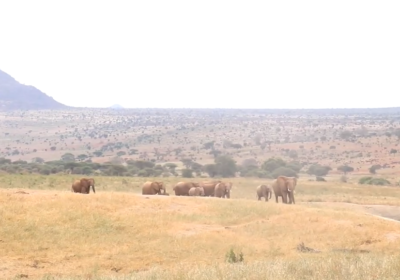
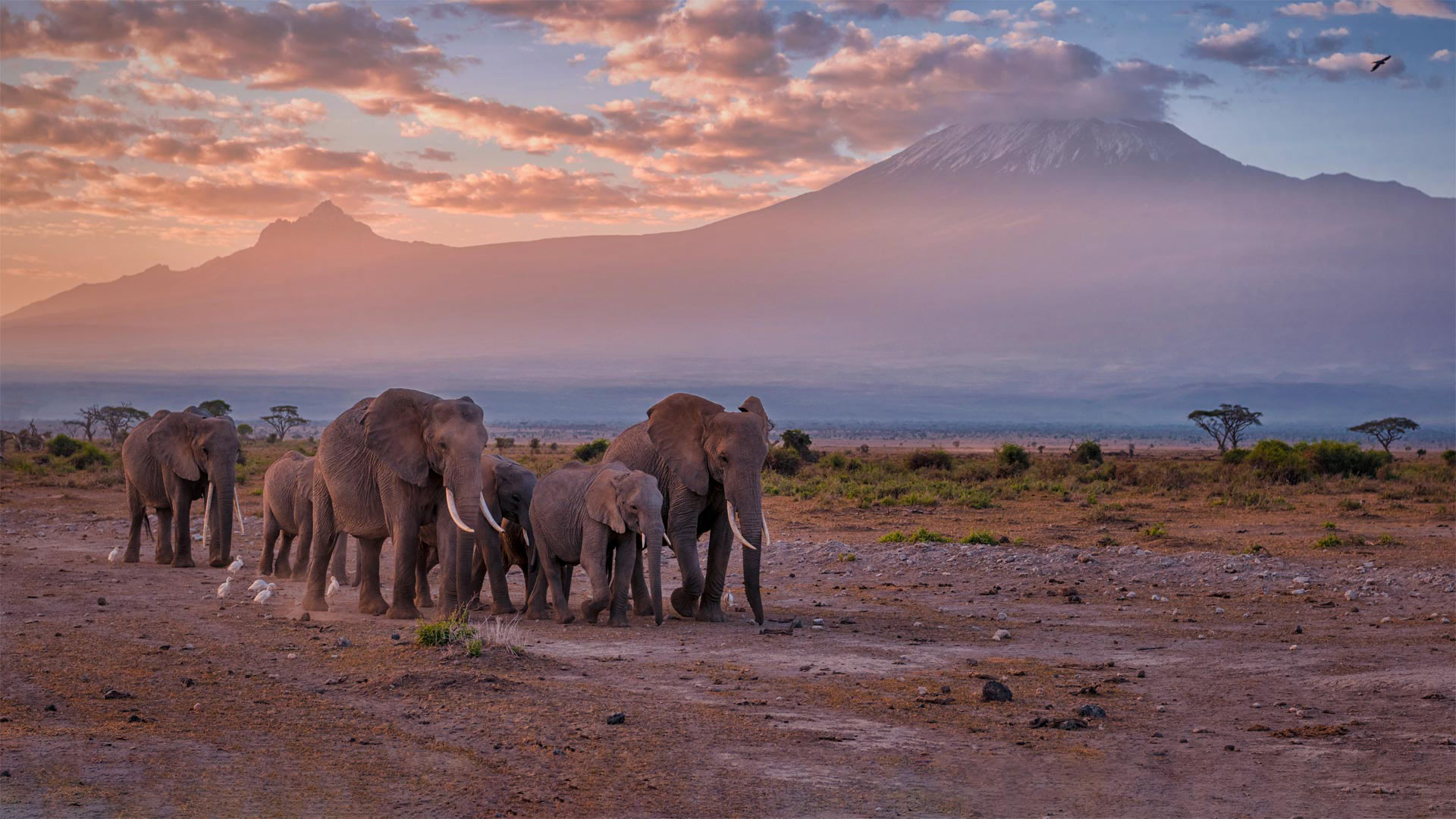
Soon, an entire family appears, their grey bodies stained deep rust-red by the soil beneath their feet.
This is Tsavo.
For travellers asking what is Tsavo famous for in Kenya safari tours, wildlife travel, red elephants, lions and Big Five adventures, the answer reaches far beyond a single attraction.
Tsavo is famous for its red elephants, legendary lions, enormous wilderness, Big Five wildlife, the Galana River, Yatta Plateau, Mzima Springs, Shetani Lava Flow, rhino conservation and one of the most dramatic stories in Kenya’s railway history.
But there is another reason experienced Kenya travellers remember Tsavo.
Space.
Tsavo feels enormous. Wildlife encounters can unfold with very few other safari vehicles around, while red roads stretch towards horizons that seem almost endless.
For anyone planning a safari to Kenya and looking beyond the most familiar routes, Tsavo offers one of the country’s most distinctive wilderness experiences.
What Is Tsavo Famous For?
Tsavo is divided into two neighbouring national parks: Tsavo East National Park and Tsavo West National Park.
Kenya Wildlife Service states that Tsavo East was established in April 1948 and covers approximately 13,747 square kilometres, making it Kenya’s largest national park. Together with Tsavo West, it forms part of a wider Tsavo Conservation Area covering roughly 22,000 square kilometres.
Tsavo East is the more open side. It is characterised by red earth, semi-arid plains, huge skies, the Galana River, Mudanda Rock, Aruba Dam and the Yatta Plateau.
Tsavo West is more dramatic and varied. Volcanic hills, lava fields, springs, rocky viewpoints, Lake Jipe and thicker vegetation make game drives feel completely different.
This contrast is one reason Tsavo deserves a place among the most memorable Kenya safari destinations.
For travellers building custom Kenya safari itineraries, the two parks can be combined with Amboseli, Nairobi, the Kenyan coast or other destinations to create a safari that moves through very different landscapes.
The Famous Red Elephants of Tsavo
If Tsavo could be represented by one photograph, it might be an elephant glowing red beneath the African sun.
The famous red elephants of Tsavo are not a different elephant species. Their colour comes from the landscape.
Elephants wallow and dust-bathe, covering their naturally grey skin with Tsavo’s iron-rich red soil. The fine soil settles across their bodies and into the folds of their skin, producing the deep reddish appearance associated particularly with Tsavo East. National Geographic and Tsavo Trust both describe this relationship between the elephants and Tsavo’s red soil.
Kenya Wildlife Service lists the red elephants among Tsavo East’s signature attractions and describes the park as a sweeping semi-arid wilderness where dust-red elephants roam across open plains and acacia scrub.
Seeing them in photographs is impressive.
Seeing them during an actual game drive is very different.
You may first notice dust rising above the bushes. Then a trunk appears, followed by an adult elephant. Sometimes a calf walks almost hidden between larger family members.
There may be no dramatic chase or predator interaction.
Sometimes the beauty is simply watching elephants move quietly through the landscape.
That is part of what makes wildlife viewing in Kenya so memorable.
The greater Tsavo landscape also remains extremely important for elephant conservation. Kenya’s national elephant conservation strategy notes the importance of Tsavo East and Tsavo West to the ecosystem’s elephant population, while organisations including Tsavo Trust and Sheldrick Wildlife Trust continue conservation work across the region.
Want to See the Red Elephants of Tsavo?
Explore Tsavo East and Tsavo West as part of an expertly planned Kenya wildlife safari with a private 4x4 Land Cruiser and professional local guide.
Explore Our Tsavo SafariThe Lions of Tsavo: When History Became Legend
Tsavo’s elephants may provide its most recognisable wildlife image, but its lions created its most famous story.
In 1898, two male lions began attacking workers during construction of a railway bridge across the Tsavo River.
The attacks created fear throughout the railway camps. Workers built fires and thorn barriers, but the lions continued returning.
Construction was severely disrupted.
Engineer John Henry Patterson eventually killed the two lions in late 1898.
Patterson later claimed that 135 people had died. Modern scientific investigation challenged that figure. Research associated with Chicago’s Field Museum estimated that the two lions consumed approximately 35 people, although uncertainty remains around the total number of people killed during the attacks.
The lions themselves are preserved at Chicago’s Field Museum, where scientific research on their remains continues.
Explore the Field Museum’s history of the Tsavo lions
The story inspired books, documentaries and the film The Ghost and the Darkness.
Tsavo lions are also interesting for another reason. Males in this ecosystem may have comparatively reduced manes, and Kenya Wildlife Service lists maneless lions among Tsavo East’s distinctive wildlife attractions.
It gives an ordinary lion sighting here another layer of meaning.
When a guide quietly points towards a lion resting beneath an acacia during one of your game drives in Kenya, you are watching the descendants of a population that has fascinated travellers, scientists and historians for more than a century.
The Yatta Plateau: An Ancient River of Lava
Wildlife is only part of Tsavo’s story.
The landscape itself is extraordinary.
Across Tsavo East stretches the Yatta Plateau, which Kenya Wildlife Service describes as the world’s longest lava flow. It dominates part of the landscape and provides a reminder that geological forces were shaping Tsavo long before modern safari tourism existed.
Elephants now walk beneath terrain created by ancient volcanic activity.
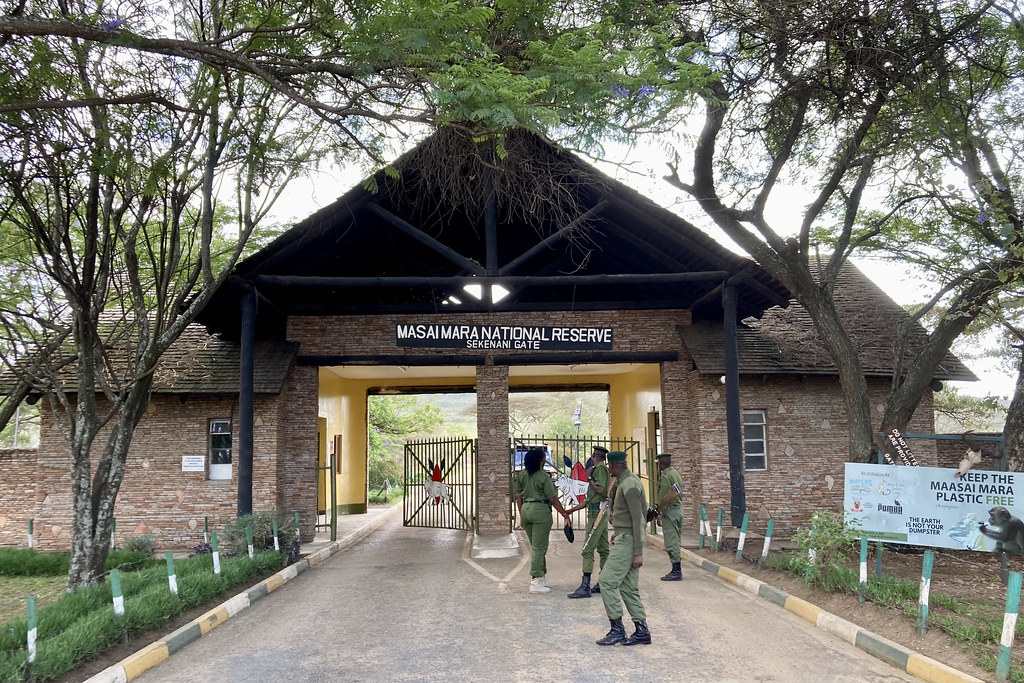
This combination of wildlife and geology makes a Tsavo safari feel very different from a traditional Masai Mara safari.
The Maasai Mara is internationally famous for predator sightings and the seasonal Great Migration Kenya safari experience.
Tsavo is more about scale, dramatic landscapes, elephants, history and the feeling of travelling through a vast wilderness.
Travellers do not necessarily have to choose one or the other. A longer Kenya safari itinerary can combine different ecosystems and create a much richer experience.
Lugard Falls and the Galana River
After kilometres of dry bush and red earth, the Galana River changes the landscape.
The river provides an important water source through Tsavo East and supports a greener corridor through otherwise semi-arid country. Kenya Wildlife Service identifies the Galana River as one of the defining features of the park.
Near Lugard Falls, water is forced through a series of narrow channels and rock formations.
Despite its name, travellers should not imagine a conventional high waterfall. The attraction is created by the river rushing through sculpted rock channels and rapids.
Nearby riverine areas may attract elephants, crocodiles, hippos and numerous bird species.
On a long Kenya savannah tour, places such as Lugard Falls remind travellers that a safari is not simply a competition to find lions, elephants and leopards.
Sometimes the landscape deserves your attention too.
Mudanda Rock and Aruba Dam
Two other important Tsavo East landmarks deserve time in a carefully planned itinerary.
Mudanda Rock is a long natural rock formation overlooking a seasonal water catchment. During dry conditions, wildlife may gather around the water below, creating opportunities for viewing animals from an elevated position.
Aruba Dam, situated along the seasonal Voi River, is another important wildlife-viewing area. Kenya Wildlife Service lists both locations among Tsavo East’s notable attractions.
For photographers, the advantage of Tsavo is variety.
One game drive can move from wide red plains to elephants around water and later towards riverine vegetation, rocky formations or dramatic skies.
This is one reason Tsavo safaris work particularly well for travellers who enjoy landscape and wildlife photography together.
Mzima Springs: Water Rising from Volcanic Country
Tsavo West provides one of the most surprising landscape changes in Kenya.
After travelling through hot, dry country, you reach Mzima Springs, where remarkably clear water emerges within a green oasis.
Tsavo Trust explains that rainwater from the volcanic Chyulu landscape filters underground through porous rock and eventually resurfaces at Mzima Springs. The springs support an important ecosystem within Tsavo West.
Kenya Wildlife Service lists Mzima Springs among the park’s signature attractions.
Hippos, crocodiles, monkeys and numerous birds are associated with the area, although wildlife sightings are never guaranteed.
The contrast is what visitors remember.
One moment you are travelling through dry bushland.
The next, you are surrounded by clear water and dense vegetation.
This ability to change character so quickly is part of what separates Tsavo West from many other Kenya wildlife safaris.
Shetani Lava Flow: A Landscape Shaped by Fire
Not far away lies one of Tsavo West’s most unusual attractions.
The Shetani Lava Flow spreads across the landscape in dark volcanic rock.
Kenya Wildlife Service lists Shetani Lava Flow and cave exploration among the park’s attractions. Tsavo West also features volcanic hills and scenic viewpoints including Poacher’s Lookout, Roaring Rocks, Chaimu Hill and the Five Sisters.
Together, these features make Tsavo West feel less like one continuous savannah and more like a collection of landscapes.
Wildlife is still central to the experience, but geology constantly competes for attention.
Is Tsavo a Big Five Safari Destination?
Yes.
Tsavo supports elephant, lion, leopard, buffalo and rhino, meaning the wider ecosystem is a genuine Big Five safari destination. Kenya Wildlife Service specifically lists the Big Five among Tsavo West’s biodiversity.
There is, however, an important difference between wildlife being present and wildlife being easy to find.
Tsavo is huge.
Its animals move across an enormous landscape, and vegetation can be thicker in some parts of Tsavo West.
That means sightings require patience.
A leopard may remain hidden.
A pride of lions may be far away from your route.
Rhino sightings should never be promised.
A responsible local Kenya safari operator should explain this rather than guaranteeing wild-animal encounters.
For some travellers, this uncertainty is exactly what makes Tsavo special.
Finding an elephant herd, lion or leopard after a quiet search can feel much more rewarding than moving between crowded sightings.
Tsavo West and the World’s Largest Rhino Sanctuary
One of the most important recent chapters in Tsavo’s story is rhino conservation.
In December 2025, Kenya announced the expansion of the Tsavo West Rhino Sanctuary to approximately 3,200 square kilometres. Kenya Wildlife Service describes it as the world’s largest rhino sanctuary. The expanded landscape was established to provide significantly more room for Eastern black rhinos and strengthen long-term population recovery.
This adds another dimension to a modern Tsavo safari.
Travellers are not visiting only a wildlife destination. They are entering a landscape where conservation decisions have international significance.
Tsavo Trust also works across the wider conservation area on elephant monitoring, Big Tusker protection, anti-poaching, community conservation and biodiversity monitoring in cooperation with Kenya Wildlife Service and other partners.
Learn more about Tsavo Trust’s conservation work
For travellers interested in wildlife conservation Kenya safari experiences, this conservation story makes Tsavo particularly important.
Responsible and Sustainable Safari Travel in Tsavo
Wildlife tourism works only when the wildlife and landscape come first.
Kenya Wildlife Service requires visitors to remain on established roads and trails, maintain a minimum wildlife-viewing distance of 20 metres, keep noise low, avoid feeding animals and carry waste out of the park. Off-road driving is prohibited.
These rules matter.
Driving too close to wildlife can change animal behaviour. Leaving established roads can damage vegetation and habitat.
A sustainable safari in Kenya is therefore not only about staying at an environmentally friendly lodge. It also depends on how guides and visitors behave inside protected areas.
When comparing safari companies in Kenya, ask how the company approaches wildlife-viewing etiquette and responsible tourism.
A good guide knows that getting closer is not always getting better.
Not Sure Which Kenya Safari Route Is Right for You?
Tell us your travel dates, number of travellers, preferred safari style and budget. NAMSA can create a private Kenya safari itinerary combining Tsavo, Amboseli, Maasai Mara, the Great Rift Valley or the Kenyan coast.
Design My Kenya SafariTsavo or Masai Mara: Which Safari Is Better?
There is no single winner.
A Masai Mara safari is particularly attractive to travellers interested in dense wildlife concentrations, big cats and the Great Migration.
Tsavo offers something different.
More space.
Red elephants.
Volcanic landscapes.
Historic lions.
Rhino conservation.
Rivers and springs.
A stronger feeling of wilderness.
Amboseli National Park tours offer another experience, particularly for travellers hoping to photograph elephants with Mount Kilimanjaro in the background.
That is why combining destinations is often better than treating Kenya’s parks as competitors.
A well-planned safari might travel from Nairobi to Amboseli, continue through Tsavo West and Tsavo East, and finish on Kenya’s Indian Ocean coast.
This route is especially attractive to travellers searching for Kenya beach holidays combine safari experiences because Tsavo provides a natural connection between the Nairobi-Amboseli region and the coast.
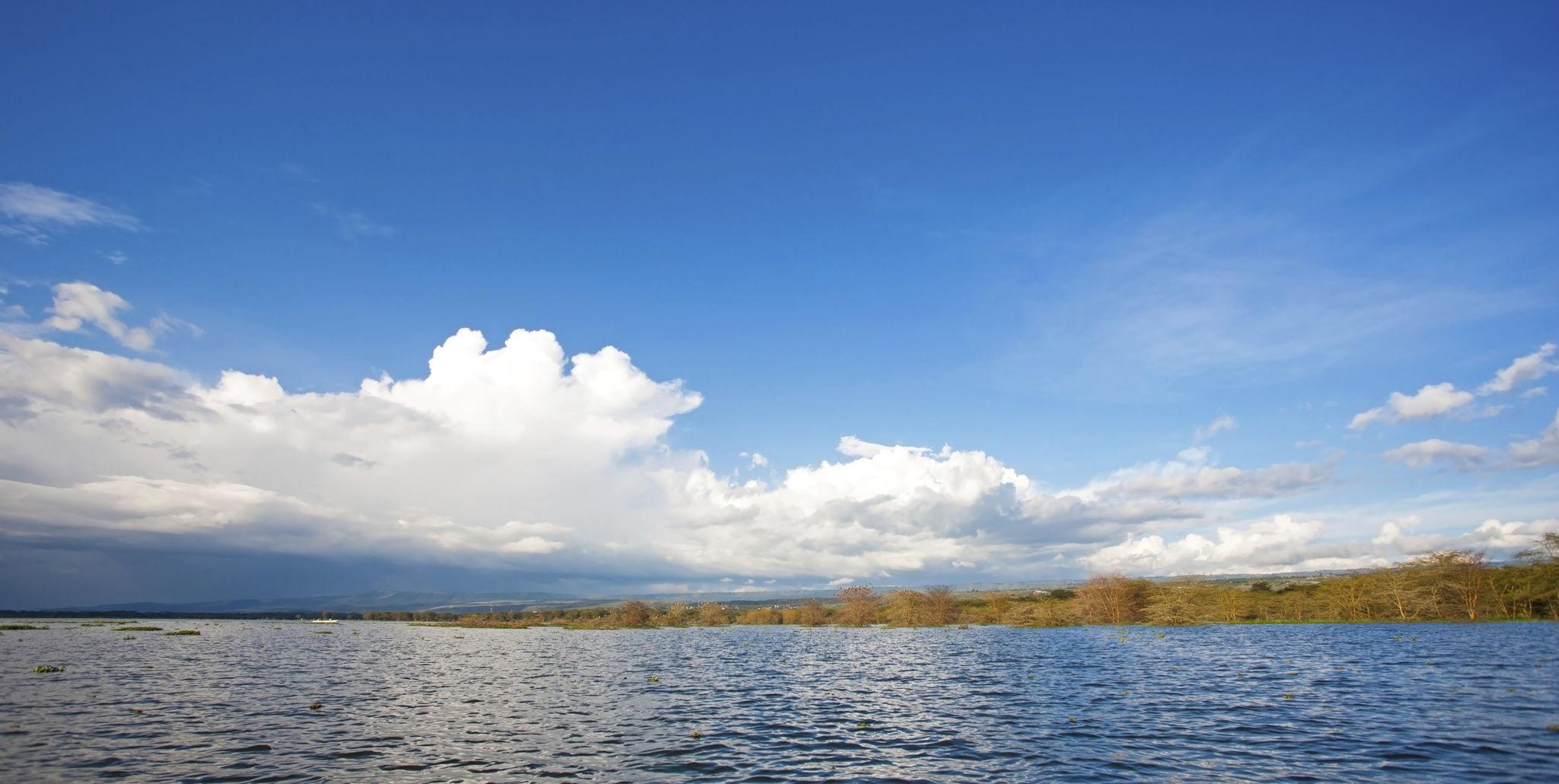
For travellers with more time, Maasai Mara, Lake Nakuru, Lake Naivasha, Samburu, Laikipia or Nairobi National Park tours can also be added to a broader journey.
Can You Combine Tsavo with the Kenya Coast?
Yes, and this is one of Tsavo’s strongest advantages.
Tsavo lies between the Nairobi region and the Kenyan coast, making it suitable for safari-and-beach itineraries.
Travellers can explore Tsavo East and Tsavo West before continuing towards Mombasa, Diani, Watamu or another coastal destination.
This works particularly well for honeymooners, families and travellers who want African safari holidays in Kenya without spending their entire holiday on game drives.
A custom Kenya safari itinerary can therefore combine wildlife, landscapes and beach time rather than forcing travellers to choose between them.
What Is the Best Time to Visit Tsavo?
Tsavo can be visited throughout the year.
Kenya Wildlife Service states that its parks and reserves offer year-round attractions, while July through March generally provides favourable wildlife-viewing conditions. April through June corresponds with the long-rain period, when some park roads can require four-wheel-drive vehicles.
Dry periods can make wildlife easier to locate because animals gather around reliable water sources and vegetation may be less dense.
The greener months offer different advantages, including dramatic skies, lush landscapes, birding opportunities and sometimes fewer visitors.
Therefore, when researching the best time to visit Kenya safari destinations, consider what matters most to you.
Wildlife photography?
Birdlife?
Lower-season travel?
Green landscapes?
Family travel?
Combining several destinations?
The best month depends partly on the experience you want.
Budget, Mid-Range or Luxury Tsavo Safari?
Tsavo can work across several travel styles.
A budget safari usually focuses spending on the essentials: park fees, transport, guiding, meals and practical accommodation. Budget Kenya safaris may use simple lodges or tented camps while still providing excellent wildlife experiences.
A midrange safari normally adds more comfortable accommodation, improved room standards, carefully located Kenya safari lodges and more personalised service.
A luxury safari may include premium tented camps, private guides, high-end lodges, carefully paced itineraries and additional experiences.
For couples, families and photographers, private Kenya safaris provide the greatest flexibility because the daily schedule can be adjusted around the travellers rather than an entire group.
For travellers watching safari costs in Kenya, group Kenya safaris or group-joining options can help spread transport costs.
NAMSA also publishes a detailed Kenya safari cost guide comparing budget, private budget, mid-range and luxury safari planning ranges.
Read NAMSA’s Kenya Safari Cost Guide
The most expensive safari is not automatically the best safari.
The quality of the guide, vehicle, itinerary design and lodge location can make a greater difference than unnecessary luxury.
Which Safari Vehicle Is Best for Tsavo?
When comparing Kenya safari vehicle types, two options are common: safari vans and 4×4 Land Cruisers.
A properly equipped vehicle should provide good visibility, sufficient luggage space and reliable access to the planned route.
For private photography trips, longer safari circuits and journeys during wetter conditions, a 4×4 Land Cruiser with a pop-up roof can provide greater flexibility.
Before booking a Kenya safari, ask whether the vehicle is private or shared, how many passengers it carries and whether everyone has appropriate viewing access.
These details affect the quality of a safari more than many travellers realise.
What Should You Expect on a Tsavo Safari?
Travellers researching what to expect on a Kenya safari should understand that safari days often begin early.
Wildlife can be active around sunrise, and morning temperatures are usually more comfortable.
There may be several hours between wildlife sightings.
There may also be moments when elephants surround the landscape, giraffes appear beside the road or lions unexpectedly emerge from the grass.
Nothing is guaranteed.
That unpredictability is part of the experience.
Game drives are usually combined with meals and rest periods at your lodge or tented camp. On some days, you may travel between parks, meaning route planning becomes extremely important.
This is why experienced Kenya safari experts avoid trying to fit too many destinations into too few days.
Planning a Safari to Tsavo: What Should You Ask Your Operator?
When planning a safari to Kenya, ask how many hours will actually be spent inside the park rather than simply looking at the total number of days.
Ask where your accommodation is located.
Ask which entrance gate will be used.
Ask whether park and conservation fees are included.
Ask whether your safari vehicle will be private or shared.
Ask which meals are included.
Ask about drinking water.
Ask about airport transfers.
Ask whether your itinerary includes long road transfers that could reduce game-viewing time.
These are practical safari booking tips Kenya travellers should consider when comparing affordable Kenya safari packages, family Kenya safaris, private journeys and premium trips.
The cheapest itinerary can become poor value if most of the trip is spent travelling between destinations.
What Should You Pack for a Tsavo Safari?
A practical packing list for Kenya safari travel should include light and comfortable clothing, a hat, sunscreen, insect repellent, binoculars, camera equipment, drinking water and basic personal medication.
Kenya Wildlife Service specifically recommends items including drinking water, a camera, binoculars, sunscreen, insect repellent and a first-aid kit for Tsavo visitors.
Neutral colours are practical for safari travel.
A light additional layer can also be useful for early morning game drives.
Photographers should carry sufficient memory cards, batteries and charging equipment because wildlife rarely waits while equipment is being prepared.
Kenya eTA and Entry Requirements for Safari Travellers
Travellers searching Kenya visa requirements for tourists should note that Kenya currently operates an Electronic Travel Authorisation, or eTA, system, with exemptions for specified categories of travellers and nationalities.
The official Kenyan eTA portal states that applicants generally need a passport valid for at least six months, a passport-style photograph, contact information, travel itinerary, accommodation confirmation and a payment method. Standard applications are generally processed within three working days, although delays are possible.
Because entry rules can change, travellers should always check the official government portal shortly before departure rather than relying on an old travel blog.
Check the official Kenya eTA requirements
Kenya’s Mandatory Inbound Travel Health Insurance
There has also been an important change for visitors travelling to Kenya in 2026.
From 5 October 2026, qualifying non-Kenyan visitors are required to hold Kenya’s mandatory inbound travel health insurance before entering the country.
The official eCitizen insurance portal states that the requirement applies to many non-Kenyan short-stay visitors, while exemptions include Kenyan citizens and valid residents, East African Community citizens, certain diplomatic travellers and some transit passengers.
For travellers requiring an eTA, the insurance process is integrated into the eTA application. The official portal currently states that the premium is up to USD 44 per person and the policy provides cover for up to 90 days.
Check Kenya’s official inbound travel health insurance requirements
Travellers should still consider whether additional comprehensive travel insurance is suitable for their own trip.
For broader health precautions for Kenya travel, visitors should seek current professional medical guidance based on their nationality, previous travel, destinations and health circumstances.
How to Choose a Kenya Safari Company
Searching for the best Kenya tour operators, top rated Kenya safari companies or highly recommended Kenya tour operators can become confusing because hundreds of businesses use similar marketing language.
Instead of relying only on advertising, examine evidence.
Check whether the company is legally licensed.
Read independent Kenya tour reviews and Kenya safari companies reviews and ratings.
Ask for a detailed itinerary rather than a vague destination list.
Confirm which accommodation properties are included.
Ask what type of vehicle will be used.
Check cancellation and payment conditions.
Ask who provides support during the safari.
Find out whether the company has genuine local destination knowledge.
When comparing trusted Kenya safari companies and recommended Kenya tour operators, communication before booking is often a useful indicator of what service may look like after payment.
Local Kenya safari operators can also provide practical knowledge of road conditions, park access, accommodation locations and realistic transfer times.
Why Explore Tsavo with NAMSA Prestigious Tours?
NAMSA Prestigious Tours is a Kenya-based safari operator providing private, group, budget, mid-range and luxury Kenya safari packages.
Tsavo can be incorporated into custom Kenya safari itineraries together with Amboseli, Laikipia, Nairobi, Lake Nakuru, Lake Naivasha, the Maasai Mara and Kenya’s coast.
One option is NAMSA’s 11 Days Kenya Special Five and Big Five Safari, which travels through Laikipia, Solio, Amboseli, Tsavo West and Tsavo East and includes private 4×4 safari transport.
Explore the 11 Days Kenya Special Five and Big Five Safari
Travellers can also request custom Kenya safari itineraries designed around their travel dates, accommodation preferences, number of travellers and budget.
Whether you are comparing budget safaris, mid-range safaris, luxury Kenya safaris, family Kenya safaris or luxury Kenya safari operators with private guides, the itinerary should be designed around the experience you actually want rather than simply the largest number of destinations.
Contact NAMSA Prestigious Tours to plan a safari
So, What Is Tsavo Really Famous For?
Perhaps Tsavo is famous because it refuses to be only one story.
It is red dust settling across an elephant’s back.
It is a lion disappearing into golden grass.
It is railway history beside the Tsavo River.
It is volcanic rock beneath a blue African sky.
It is Mzima Springs appearing unexpectedly in dry country.
It is the world’s largest rhino sanctuary protecting the future of an endangered species.
It is the Galana River cutting through red wilderness.
And sometimes, it is simply silence.
Tsavo does not always give visitors wildlife on demand.
Instead, it gives them space to search, watch and wait.
That is exactly why many travellers remember it.
Come for the red elephants.
Come for the lions.
Come for the landscapes.
Come for the conservation story.
But leave enough space in your itinerary for something you did not plan.
Because somewhere along a quiet red road in Tsavo, Kenya may give you the safari moment you remember long after you return home.
Plan Your Tsavo Safari with NAMSA Prestigious Tours
NAMSA Prestigious Tours creates budget safari, midrange safari and luxury safari journeys across Kenya and East Africa.
Choose from private Kenya safaris, family Kenya safaris, group Kenya safaris, photography trips, custom Kenya safari itineraries, Kenya beach holidays combined with safari and wider East Africa safari tours.
Safari planning can include accommodation, Kenya airport transfers safari services, professional guides, private 4×4 vehicles, park arrangements and carefully selected Kenya safari accommodation options.
Plan Directly With a Local Kenya Safari Operator
Your Tsavo Safari, Built Around You
Budget, mid-range or luxury. Private, family or group travel. Tell NAMSA what you want to experience and we will help design a practical Kenya safari around your dates and budget.
Start Planning My SafariFrequently Asked Questions About Tsavo
Have more questions? Contact us.
What is Tsavo most famous for?
Tsavo is most famous for its red elephants, historic man-eating lions, huge wilderness, Big Five wildlife, Yatta Plateau, Galana River, Lugard Falls, Mzima Springs, Shetani Lava Flow and major elephant and rhino conservation work.
Why are Tsavo elephants red?
Tsavo elephants are naturally grey. They appear red because they dust-bathe and wallow in Tsavo’s iron-rich red soil, which coats their skin.
Is Tsavo worth visiting?
Yes. Tsavo is particularly suitable for travellers who enjoy elephants, large wilderness areas, landscape photography, volcanic scenery, history and safari experiences that can feel less concentrated than Kenya’s smaller protected areas.
Which is better, Tsavo East or Tsavo West?
Tsavo East is ideal for wide landscapes, red elephants, the Galana River, Mudanda Rock, Aruba Dam and the Yatta Plateau. Tsavo West offers more varied topography, Mzima Springs, volcanic landscapes, Lake Jipe, viewpoints and major rhino conservation. Visiting both provides the most complete Tsavo experience.
How many days should I spend in Tsavo?
Around three to four days can provide a useful introduction to Tsavo East and Tsavo West. Travellers wanting slower photography, wildlife viewing and less rushed transfers can stay longer.
Can I see the Big Five in Tsavo?
Yes, the Tsavo ecosystem supports lion, leopard, elephant, buffalo and rhino. However, sightings of individual species are never guaranteed because wildlife moves freely across an enormous landscape.
What is the best time to visit Tsavo?
Tsavo is a year-round destination. Kenya Wildlife Service generally identifies July through March as favourable for wildlife viewing, while April through June experiences the long rains and some roads can become more challenging.