





What Documents Do I Need to Travel to Kenya? 2026 Guide
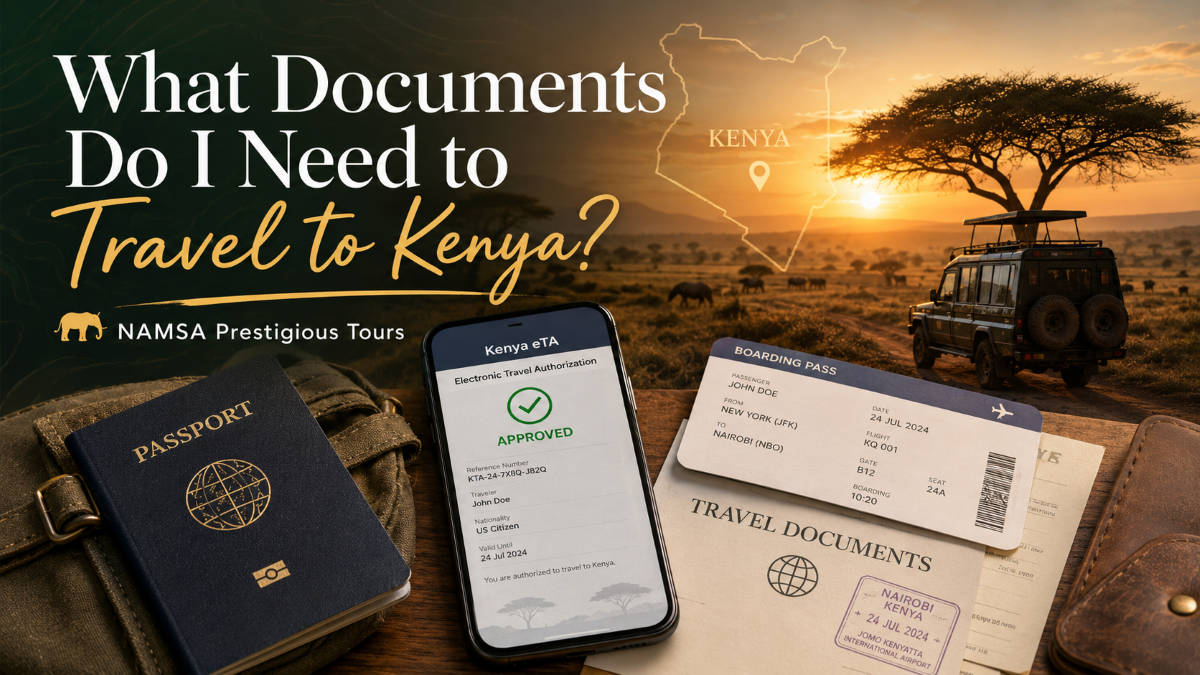
There is a particular moment when a journey to Kenya begins to feel real. Perhaps it is when the flights are booked, the safari itinerary arrives in your inbox, or you begin imagining your first sunrise over the African savannah.
Then comes the practical question: what documents do I need to travel to Kenya?
For most international visitors, the essential Kenya travel documents include a valid passport and, depending on nationality and immigration status, an approved Electronic Travel Authorisation, commonly called an eTA. Travellers may also need accommodation confirmation, return or onward travel details, health documentation and additional supporting documents depending on the purpose of travel.
Kenya’s entry system has changed significantly in recent years. Therefore, travellers should be careful with older information about Kenya visas and entry requirements.
If this will be your first safari, our complete guide to planning a Kenya safari can help with the rest of your preparation.
Kenya Travel Documents at a Glance
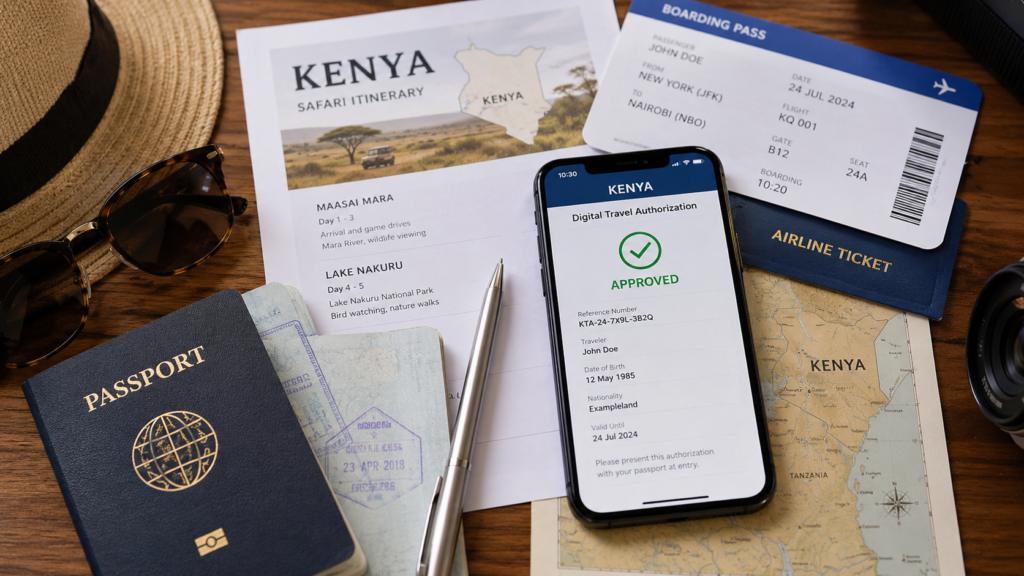
For a typical holiday or safari, prepare your passport, proof of your travel arrangements, accommodation confirmation and your Kenya eTA if your nationality requires one.
Kenya’s Directorate of Immigration also identifies a valid travel document, the appropriate eTA or entry permit, and a return or onward ticket among travellers’ immigration obligations.
One important point has changed for 2026: not every foreign visitor needs an eTA.
Kenya’s amended immigration rules introduced several eTA exemptions in 2025. Your nationality and immigration status should therefore be checked on the official Kenya eTA website before submitting or paying for an application.
1. A Valid Passport
Your passport is the most important of the documents needed to travel to Kenya.
The official Kenya eTA service requires a passport that remains valid for at least six months after your planned date of arrival and has at least one blank page.
Check the expiry date several months before departure, rather than discovering a problem when checking in for your flight.
There can also be nationality-specific guidance. For example, the UK’s current Kenya travel advice tells British passport holders to have at least two blank pages. Therefore, although Kenya’s eTA application itself specifies one blank page, having two available pages where possible provides additional room for immigration formalities.
Make a digital copy of the passport bio-data page and keep it separately from the original.
2. Do I Need a Kenya eTA in 2026?
The Kenya Electronic Travel Authorisation is one of the most important parts of the country’s current entry system.
The eTA replaced traditional visa requirements for many travellers. However, under the current rules, visitors fall into two broad groups: those who must obtain an eTA before travelling and those who qualify for an exemption.
This distinction is especially important because older travel articles often state that every foreign visitor needs an eTA.
The official Kenya eTA exemption list now includes citizens of East African Partner States and nationals of numerous other countries for specified periods. These include, among others, South Africa, Ghana, Botswana, Malaysia, Singapore, Mauritius, Zambia and Zimbabwe. A separate group of African nationalities, including Nigeria, Egypt and Morocco, is exempt for stays not exceeding 60 days.
Because exemptions may change, check the official list using your own nationality rather than depending on a travel blog alone.
For travellers who require an eTA, Kenya recommends applying at least two weeks before travel, although applications are usually processed in about three working days.
An eTA is valid for travel to Kenya within 90 days from its date of issuance. The permitted duration of your stay is determined by immigration officials when you enter Kenya.
Top Maaai Mara safari for you

Login to use

7 Days Magical Kenya Wildebeest Migration Safari 2026/2027
3. Documents Needed for a Kenya eTA Application
If you require an eTA, prepare everything before beginning your application.
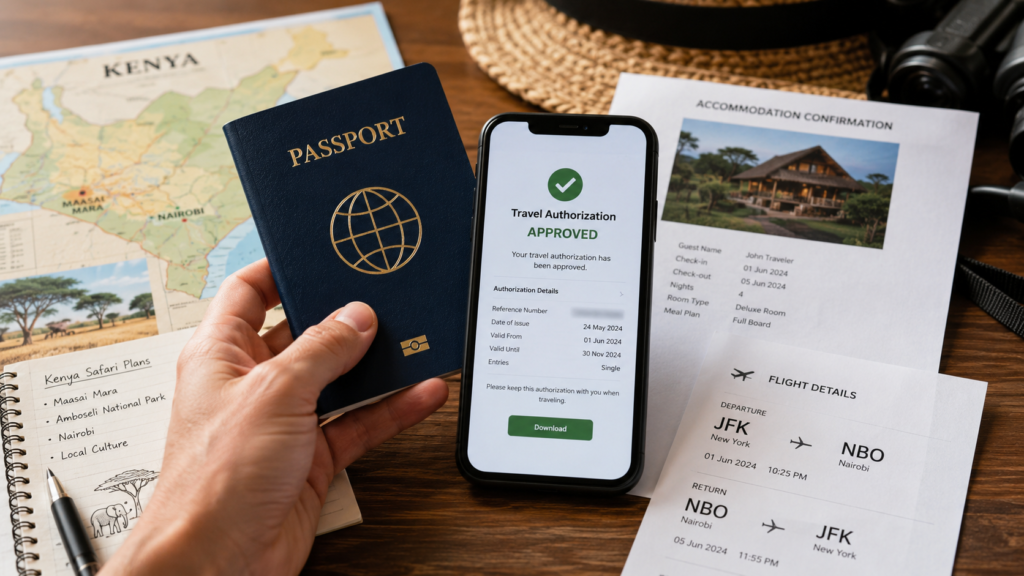
The official Kenya eTA service asks for a valid passport, a recent selfie or passport-style photograph, an email address and telephone number, arrival and departure itinerary, accommodation confirmation and an accepted payment method.
Apply only through the official Kenya Electronic Travel Authorisation portal or the official Kenya Travel Authorisation mobile application.
Once the eTA is approved, you can print the PDF, download it to your mobile device or save it in the official app. The authorisation must be available for presentation at departure and arrival points.
For travellers still choosing their route, our guide to recommended Kenya safaris for first-time visitors can help you decide where to go before completing your accommodation details.
4. Yellow Fever and Health Documents for Kenya
A yellow fever vaccination certificate is not automatically required from every traveller entering Kenya.
Kenya’s Port Health guidance requires proof of yellow fever vaccination when arriving from a country where there is a risk of yellow fever transmission.
Your travel route matters. A traveller arriving directly from a country without yellow fever risk may face different requirements from someone who has recently travelled through a risk country.
The CDC Kenya traveller health guide confirms that travellers aged one year or older arriving from countries with yellow fever transmission risk may be required to provide vaccination proof. It also provides useful recommendations concerning malaria, hepatitis A, typhoid and other travel-health considerations.
The World Health Organization explains that a single approved yellow fever vaccine dose provides lifelong protection and that immunity develops for most people within about 10 days.
Kenya’s Ministry of Health states that travellers are no longer routinely required to show proof of COVID-19 vaccination or a pre-departure COVID-19 test simply to enter the country.
Health controls can nevertheless change during regional disease outbreaks, so check the Kenya Ministry of Health shortly before departure.
5. Documents for Children Travelling to Kenya
Children should have their own valid travel documents.
Kenya’s eTA guidance states that infants and children requiring an eTA need an individual authorisation. A single parent’s eTA does not cover the whole family. Group applications are possible, but each passenger still receives the required individual travel authorisation.
The important exception is nationality or immigration status. If a child falls within one of Kenya’s recognised eTA exemption categories, the exemption can apply accordingly.
Parents travelling alone with a child should also check their airline, transit-country and home-country requirements. Depending on the journey, a birth certificate, parental consent letter or other documents may be requested even when they are not part of Kenya’s standard tourist eTA checklist.
6. Transit Passengers and Kenya eTA Exemptions
Some passengers merely changing flights in Kenya do not need an eTA.
The official exemption rules include passengers who transfer to another aircraft without leaving the airport precincts, as well as passengers arriving and departing on the same aircraft.
However, if your connection requires you to pass through Kenyan immigration, collect baggage, change airports or leave the airport, check your eTA status before travelling.
The exemption rules also cover certain permanent residents, valid work permit or pass holders, East African Partner State citizens, specified nationalities and several diplomatic or international-organisation categories.
Always check the official list because exemptions are one of the areas where older Kenya travel requirements are most likely to be inaccurate.
7. Additional Documents Depending on Why You Are Visiting Kenya
A holidaymaker and a business traveller may not be asked for exactly the same supporting documents.
Kenya’s eTA system states that business travellers may need a company invitation letter and a copy of the company’s registration. Family visitors may need an invitation from their host together with the host’s identification, passport, Alien Card or entry permit. Conference participants may require an invitation or participation letter, while medical visitors may need a referral from a hospital.
Travellers intending to work, study or conduct activities beyond an ordinary short visit should consult the Kenya Directorate of Immigration Services for the correct permit rather than assuming a tourist eTA is sufficient.
Important Note About Older Kenya Visa Advice
Be careful when searching for Kenya visa requirements online.
Older websites may still discuss Kenya’s previous eVisa system, visa-on-arrival procedures or pandemic-era COVID documentation. The current system centres on the Electronic Travel Authorisation and the exemptions introduced under Kenya’s amended immigration rules.
The safest approach is simple: use blogs to understand the process, but use the Kenyan government’s official portal to confirm whether you personally need an eTA.
Travellers can also cross-check nationality-specific advice issued by their own government. For example, the UK Foreign, Commonwealth & Development Office Kenya entry guide provides passport, eTA and vaccination information specifically for British travellers.
Kenya Travel Document Checklist
Before leaving home, check that you have:
A passport valid for at least six months after your planned arrival.
-
Sufficient blank passport pages for your journey.
-
An approved Kenya eTA if your nationality requires one.
-
A printed or digital copy of your approved eTA.
-
Return or onward travel details.
-
Flight confirmations.
-
Hotel, lodge, camp or other accommodation confirmations.
-
A yellow fever vaccination certificate if required for your travel route.
-
Business, conference, medical or family invitation documents where applicable.
-
Travel insurance documents.
-
Digital copies of your passport and important travel documents stored securely
Once the paperwork is complete, you can turn to the enjoyable part of planning. Our guide explaining how much a Kenya safari costs can help you prepare a realistic safari budget.
Frequently asked questions
Have more questions? Contact us.
Do I need a visa to travel to Kenya in 2026?
For most ordinary short visits, Kenya now uses an Electronic Travel Authorisation rather than the traditional tourist visa system. However, a growing number of nationalities and traveller categories are exempt from obtaining an eTA. Check the official Kenya eTA exemption list before applying.
How long must my passport be valid for Kenya?
Kenya’s eTA portal requires a passport valid for at least six months after your planned arrival date, with at least one blank page. Some nationality-specific travel guidance may require or recommend additional blank pages.
Do children need a Kenya eTA?
Children and infants who are not exempt require their own eTA. One authorisation does not automatically cover an entire family.
How early should I apply for a Kenya eTA?
Applications are usually processed within about three working days, but Kenya’s official guidance recommends applying at least two weeks before travel to allow enough time for verification or additional checks.
How long is a Kenya eTA valid?
The eTA is valid for travel within 90 days from the date it is issued. Your permitted length of stay is determined when you enter Kenya.
Do I need a yellow fever certificate to enter Kenya?
Not everyone does. A yellow fever vaccination certificate is generally required when arriving from a country with a risk of yellow fever transmission. Check your full route, including relevant transit stops.
Do I need a COVID-19 test to enter Kenya in 2026?
Routine proof of COVID-19 vaccination and routine pre-departure testing are no longer standard entry requirements for all travellers. Health screening requirements can nevertheless change in response to public-health developments.